What to take away.
- You do not need a plugin. Half the tools here install with one script or through Google Tag Manager, which means nothing to update and nothing to break on the next WordPress release.
- Pick by what you want the chat to do. Answering FAQs from your pages is table stakes now; booking a call inside the chat and improving the opening line on its own are what separate the list.
- Every tool here has a free tier or a free plugin, so the real cost is your time. Try the embed route first; it takes ten minutes and touches nothing in your theme.
- Only one option on the list gets better without anyone touching it. That is Darwin, and the table shows it.
If you run a business on WordPress and you want a chatbot that actually knows your site, you have two decisions to make, and most guides only cover one of them. The first is which tool. The second is whether it should be a plugin at all.
A disclosure before the list. We make Darwin, AI website chat that answers from your pages and books meetings, and it installs on WordPress without a plugin, so we have a view on that second question. We have still written the list we would hand a friend who runs a WordPress site, and it includes plugins we would pick over Darwin for a blog or a shop. Every price and plan detail comes from the vendor's own published pages and carries the date we last checked it.
If you only read one paragraph: a small business that wants a free chatbot answering questions from its pages should start with Jotform or WPBot. A developer who wants their own model keys and full control: AI Engine. An online store on a budget: Tidio. A B2B site that wants the chat to turn visitors into booked calls and keep getting better at it: Darwin, which is free until it books.
WordPress AI chatbots at a glance
The Install column is the plugin-or-embed question. Learns from your site means the assistant reads your pages itself rather than waiting for you to paste answers. Hover a cell for the full finding and its check date.
| Tool | Install | Learns from your site | Native booking | Improves on its own | Starting price | Free plan or trial |
|---|---|---|---|---|---|---|
 Darwin Darwin | Script or GTM, no plugin | Yes | Via integration | Yes | $0/mo | 5 free bookings |
 WPBot WPBot | Plugin | Pages, posts, sitemap | Google Calendar in chat | Not documented | Free plugin | Free version |
 AI Engine AI Engine | Plugin | Embeddings you set up | Not documented | Not documented | $0/mo | Free version |
 Jotform AI Chatbot Jotform AI Chatbot | Plugin | Crawls your site | Google Calendar reservations | Not documented | $0/mo | Free plan |
 Tidio Tidio | Plugin | URL scraper | Via integration | Not documented | $0/mo | 7 day trial |
 Elfsight AI Chatbot Elfsight AI Chatbot | Embed code | Your URLs | Not documented | Not documented | $0/mo | Free plan |
 Chatbase Chatbase | Plugin or embed | Websites, files, Notion | Calendly or Cal.com in chat | Not documented | $0/mo | Free plan |
 ChatBot.com ChatBot.com | Plugin | Website + files | Offers a booking | Not documented | $25/user/mo | 14 day trial |
Values come from shared product facts, checked Sep 11, 2026 to Sep 16, 2026. Sources
Plugin or embed: which route to take on WordPress
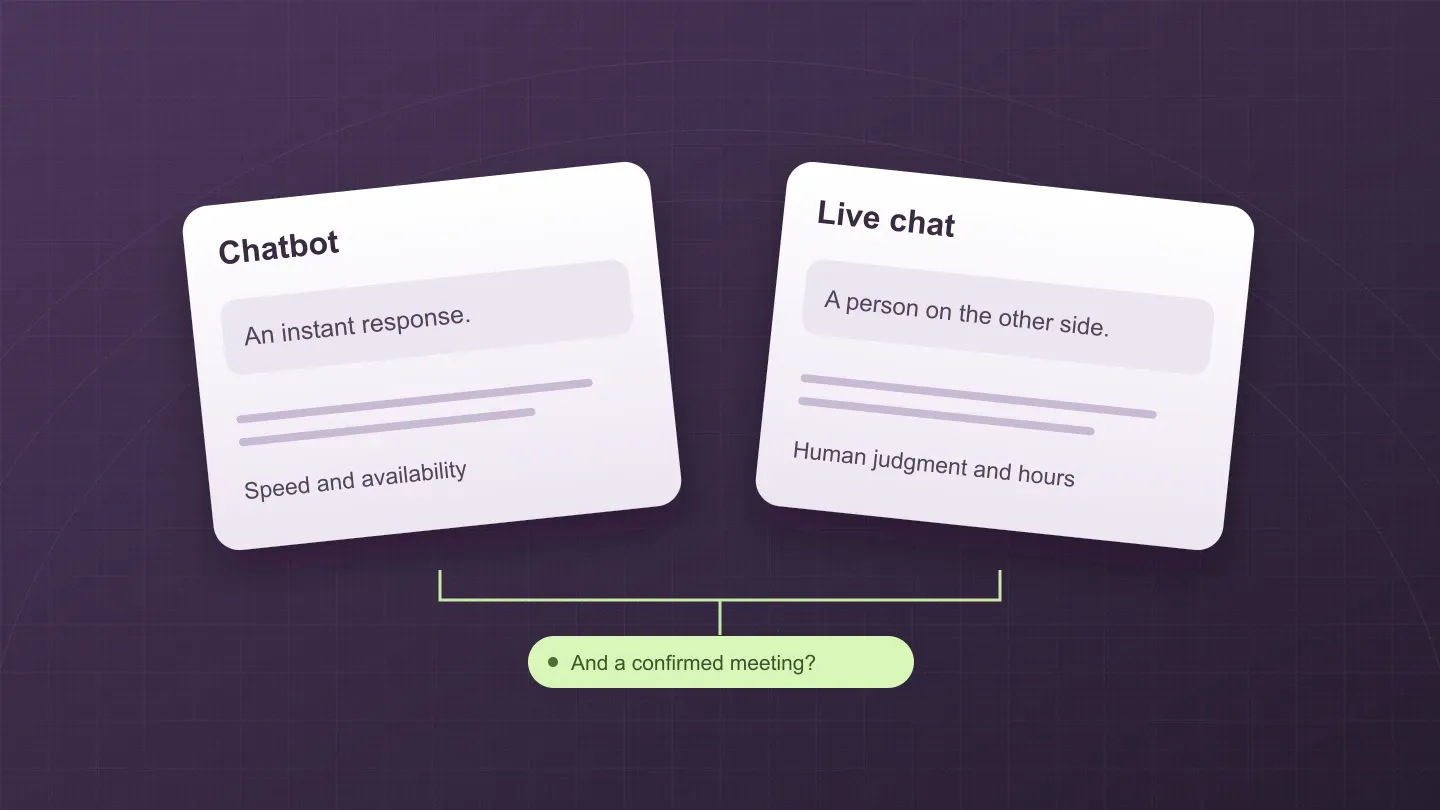
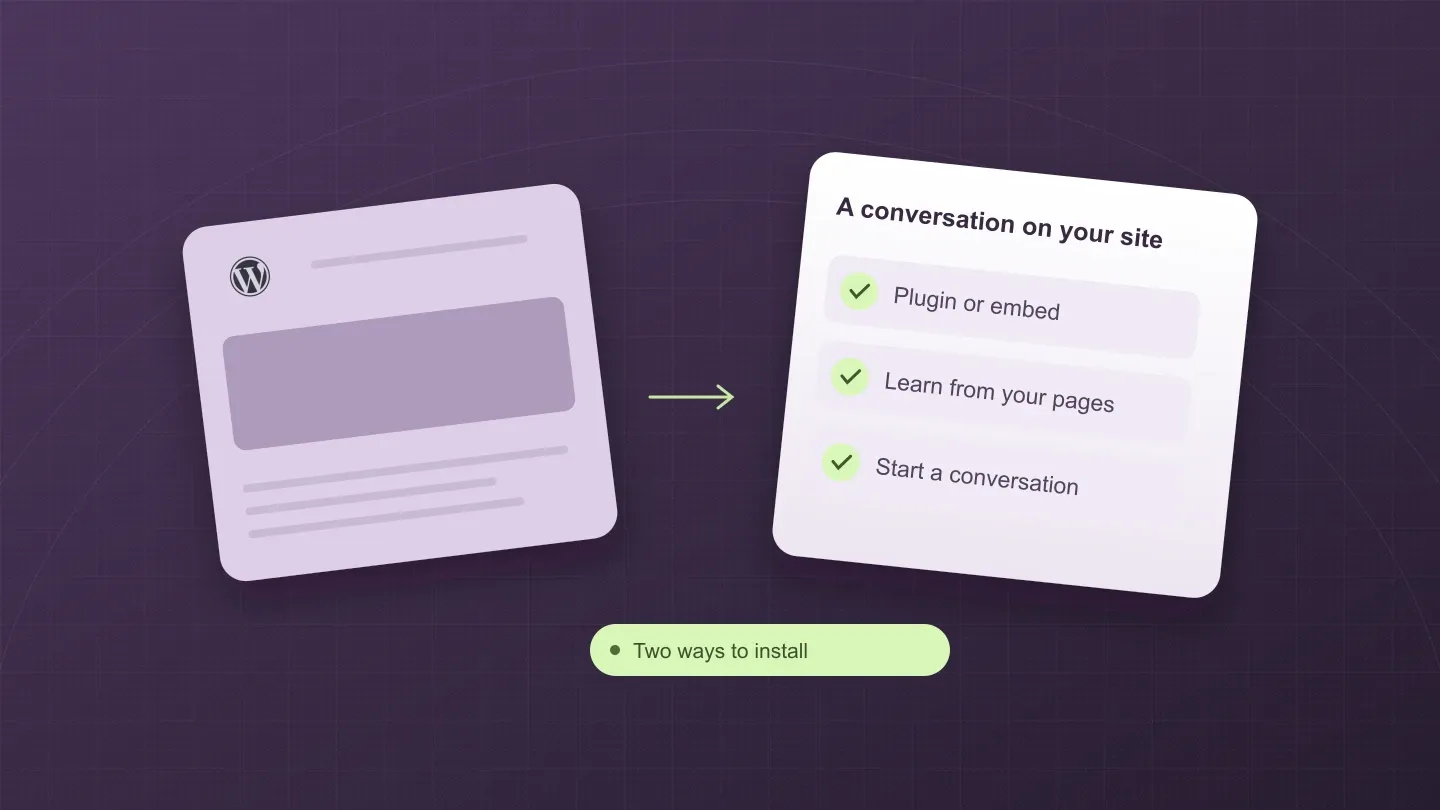
A WordPress plugin runs inside your site. It has a settings page in your dashboard, it can read your posts directly, and it updates through the plugins screen like everything else. An embed is a single script tag, usually added through your theme's footer, a snippet plugin like WPCode, or Google Tag Manager. The chatbot itself runs on the vendor's servers and reads your site the way a visitor would.
Plugins win when you want the bot to live inside WordPress: to read private post types, to hook into WooCommerce orders, or to run on your own API keys with no monthly fee. They lose on maintenance. Every plugin is one more thing that can conflict with your caching layer, your page builder, or the next core update, and a chatbot plugin that loads its own scripts on every page is a common reason a PageSpeed score drops.
Embeds win on everything else. Nothing to update, nothing that breaks when you switch themes, one line in Tag Manager if you already use it. The bot reads your public pages, which for most business sites is exactly what you want it to know. The trade-off is that it cannot see anything a visitor cannot see.
- Choose a plugin if you need WooCommerce data, private content, or your own model keys.
- Choose an embed if you want the fastest install, no maintenance, and a bot that reads your public site.
- Either way, test with your caching plugin on. Most “the chat disappeared” tickets are a cache that served an old page.
Darwin
B2B and service businesses on WordPress that want the chat to answer from the site, book a call, and improve on its own.
Blogs and stores that need WooCommerce data or a support inbox.
- Install
- Script or GTM, no plugin
- Starting price
- $0/mo
- Free plan or trial
- 5 free bookings
- Native booking
- Via integration
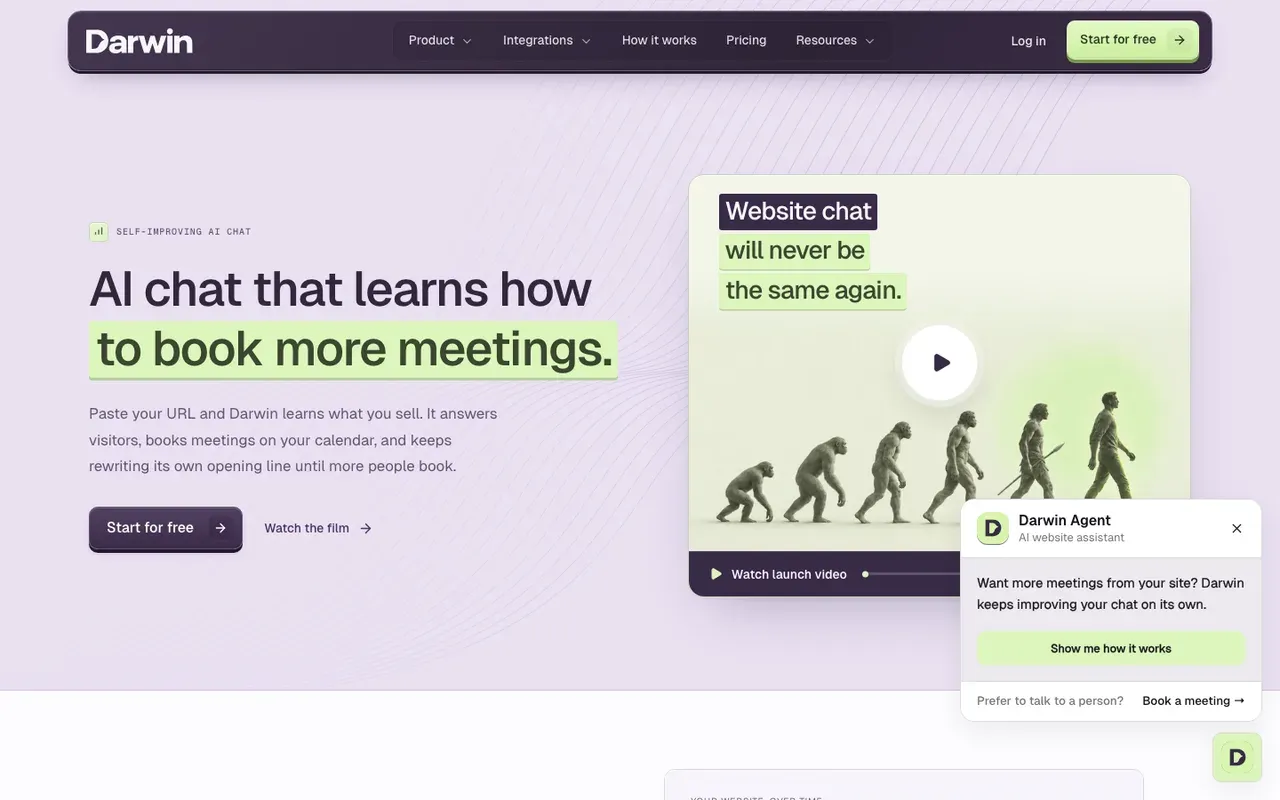
Darwin is an embed, not a plugin. Darwin is added through your script-insertion method or the shared theme footer; there is no separate Darwin marketplace app to install. Paste your workspace snippet through your usual script method or the shared theme footer, publish, and it is live on the pages you choose. Nothing to update in your plugins screen.
It reads your site on its own: Discovers relevant website pages and prepares the knowledge base. A visitor asks a question, gets an answer from your pages, and if they sound interested, picks a time on your calendar through Calendly, RevenueHero or HubSpot Meetings without leaving the chat.
Then comes the part no other tool on this list does. Darwin gets better on its own. It tries different opening lines on each page, keeps the ones that lead to more meetings, drops the rest and tests again. Origin costs $0/mo and includes 5 free bookings; after that it is $20/booking, or a plan from $99/mo with bookings included.
The step-by-step is on the Darwin WordPress integration page, and the plans are on the pricing page.
Where it stands out
- No plugin, so nothing to update or conflict with your theme
- Learns your business from your pages in under an hour
- Books the meeting inside the chat, on the scheduler you already run
- The only tool here that improves its own openings without intervention
Limitations
- Website only: no WooCommerce order lookups, no support inbox
- Cannot see content that is not public
- Younger product with a shorter track record
Verdict. The pick if your WordPress site exists to start conversations that turn into calls. Not the pick for a shop or a support desk.
Facts checked Sep 11, 2026Darwin
WPBot
Small businesses that want a native WordPress plugin with a free tier, booking in the chat, and a choice of AI models.
Teams that do not want to manage an AI provider account and API key.
- Install
- Plugin
- Starting price
- Free plugin
- Free plan or trial
- Free version
- Native booking
- Google Calendar in chat
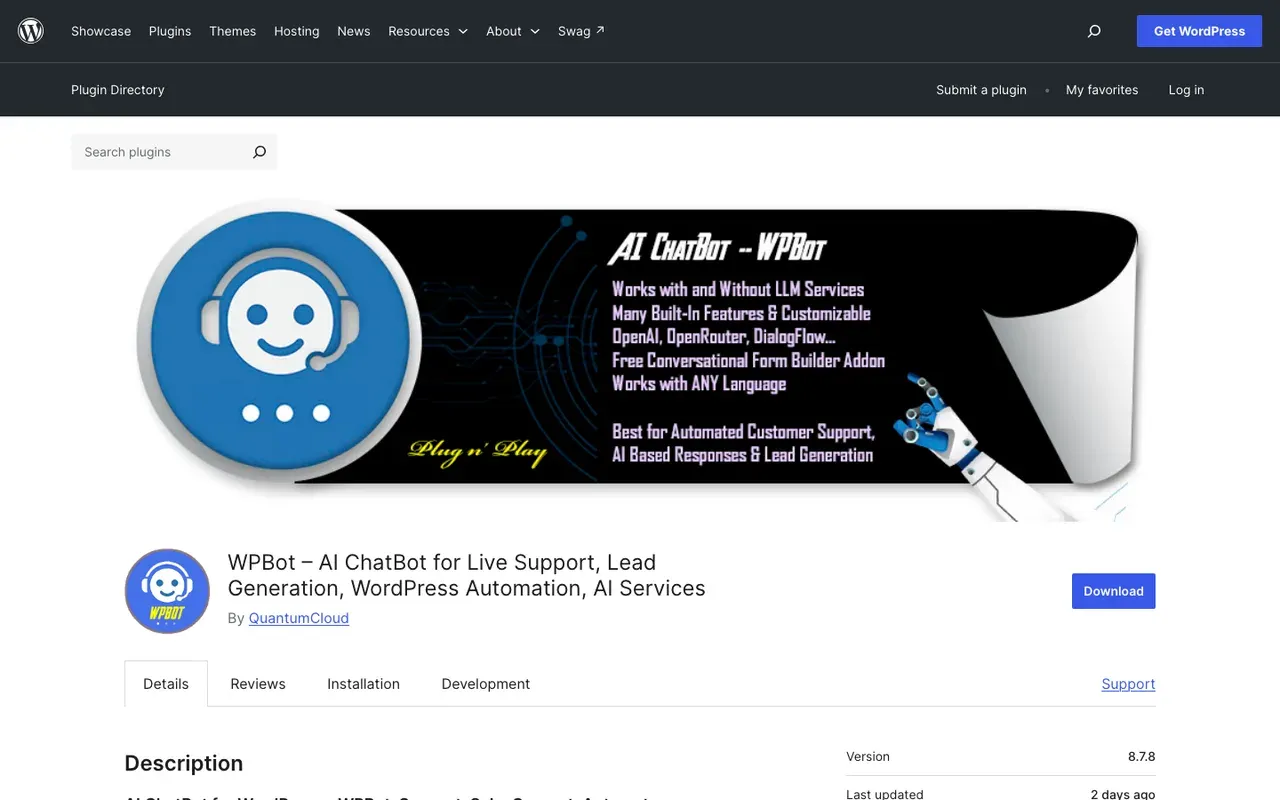
WPBot is the plugin most WordPress owners find first, and it has grown into a full assistant. AI chatbot plugin for WordPress covering live support, lead generation and automation, powered by OpenAI, Gemini, OpenRouter models or Dialogflow. It trains on your live site: Trains by embedding your live website data, pages, posts, custom post types or sitemap links, with RAG and vector database support. Booking is built in through Google Calendar: Google Calendar scheduling lets visitors book real-time appointments, consultations and reservations inside the chat.
The free version is on WordPress.org; Free plugin with a paid Pro upgrade; AI usage is billed by your own provider account. The plugin page shows A free version with 5,000+ active installations and a 4.7 out of 5 rating.
Details are on the WPBot plugin page.
Where it stands out
- Native plugin with a free version and 5,000+ active installs
- Trains on your pages, posts and sitemap
- Books appointments in the chat through Google Calendar
- Works with OpenAI, Gemini, OpenRouter models and Dialogflow
Limitations
- Pro pricing is not shown on the plugin page
- You bring your own AI API key and pay the provider
- A plugin loading on every page can affect speed; test with caching on
Verdict. The best all-round WordPress-native plugin, especially if you want booking without leaving WordPress.
Facts checked Sep 16, 2026WordPress.org
AI Engine
Developers and site owners who want their own model keys, full control, and no monthly chatbot fee.
Anyone who wants booking, or a bot that works without configuring embeddings.
- Install
- Plugin
- Starting price
- $0/mo
- Free plan or trial
- Free version
- Native booking
- Not documented
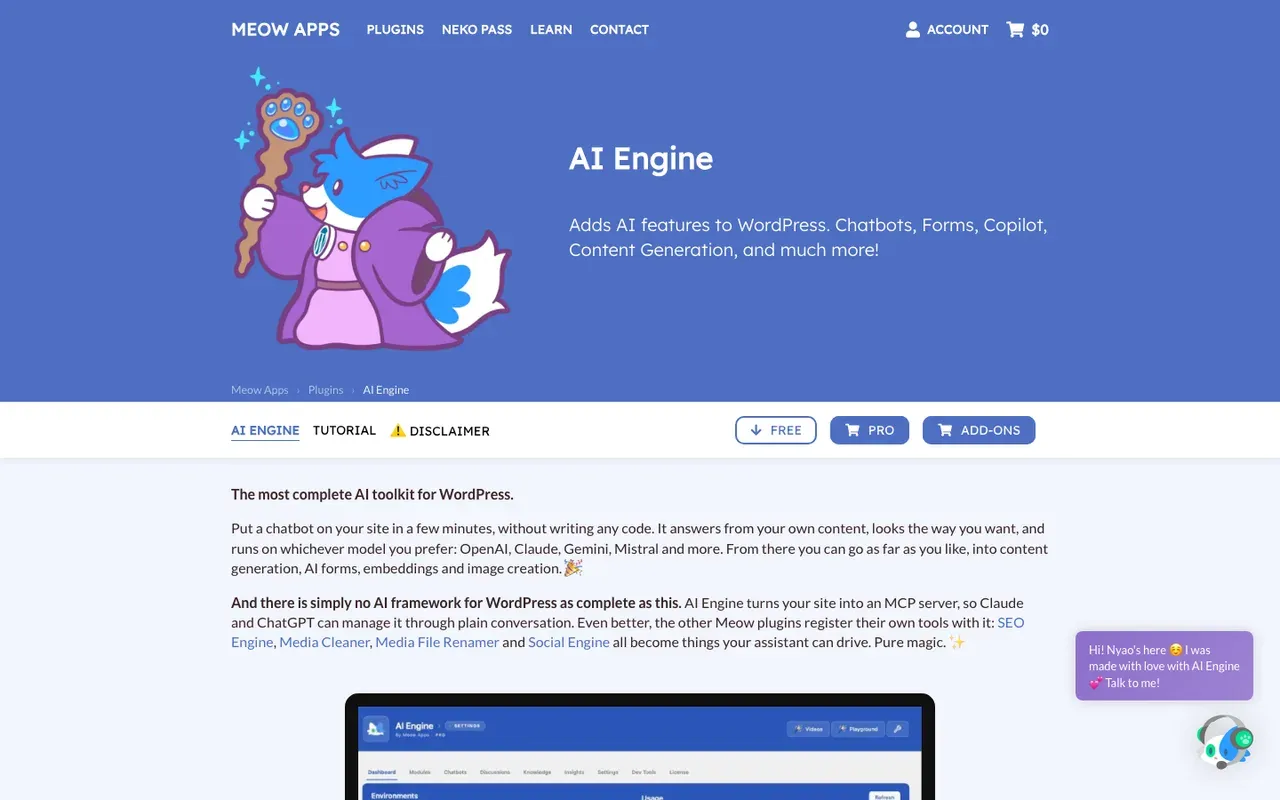
AI Engine is the toolkit option. WordPress AI toolkit: chatbots, forms, copilot and content generation on your own provider accounts and keys. You bring your own OpenAI, Claude, Gemini or Mistral account, and the plugin is the layer that makes them useful inside WordPress; Free plugin plus a Pro licence; no markup on tokens, no metered add-on, no lock-in.
Knowledge is something you build: Knowledge comes from embeddings you build from posts and PDFs into Pinecone, Qdrant, Chroma or an OpenAI vector store. There is no booking feature, and the free version is on WordPress.org with AI Engine Pro is listed at $79.
Details are on Meow Apps' AI Engine page.
Where it stands out
- Bring your own model and keys, no token markup
- Embeddings into Pinecone, Qdrant or OpenAI vector stores
- Free version; one-off Pro licence rather than a subscription
Limitations
- No meeting booking
- Knowledge base is a setup project, not automatic
- Aimed at people comfortable with API keys and vector databases
Verdict. The developer's WordPress chatbot. Powerful, cheap to run, and not for the marketing team to set up alone.
Facts checked Sep 16, 2026Meow Apps
Jotform AI Chatbot
Small businesses that want a free plugin that crawls the site and can take reservations.
B2B teams that want the chat to improve by itself, or heavy traffic on the free tier.
- Install
- Plugin
- Starting price
- $0/mo
- Free plan or trial
- Free plan
- Native booking
- Google Calendar reservations
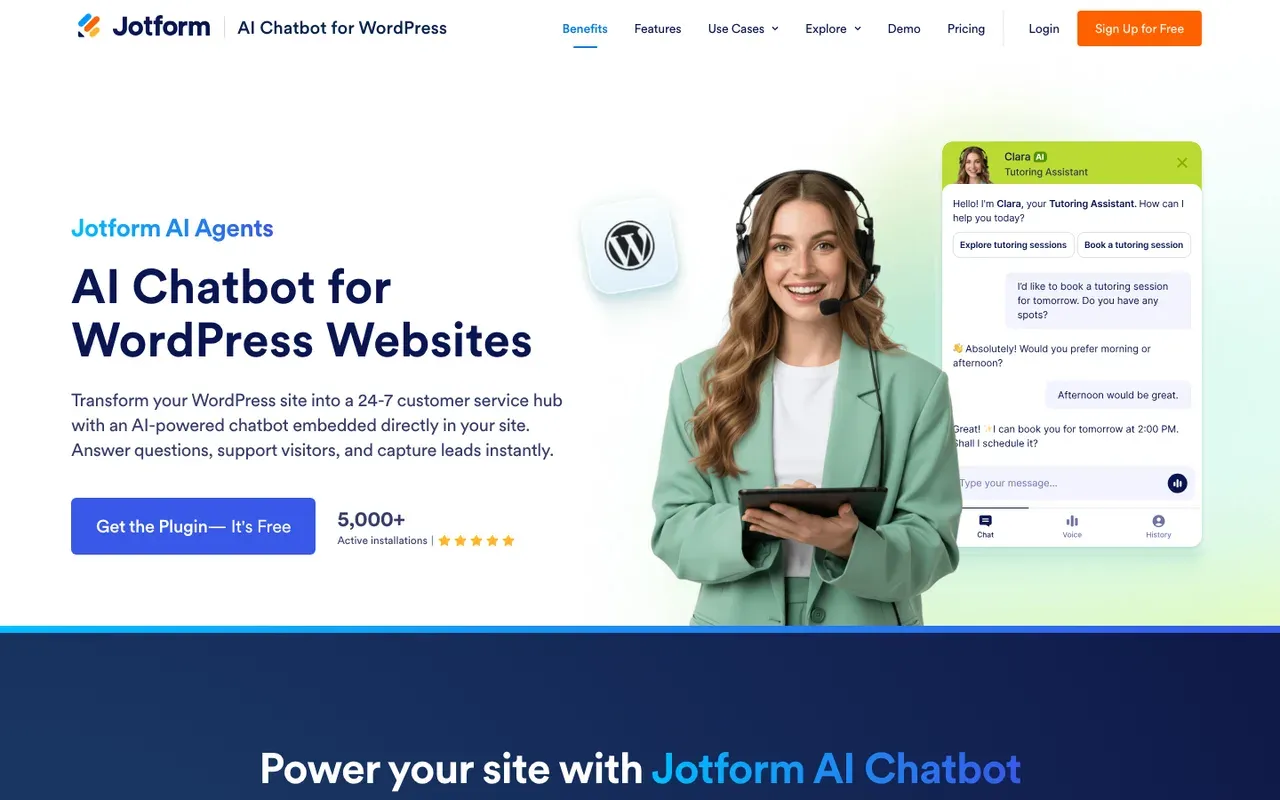
Jotform is better known for forms, which is why its chatbot plugin surprises people. You install it from the WordPress dashboard like any other plugin, and from there it does the two things small businesses actually want: it crawls your site so the answers update when you edit a page, and it takes reservations against your Google Calendar availability. Nothing to paste, nothing to train by hand.
The catch is that it runs on Jotform's plans rather than its own. The Starter plan is free with 100 monthly conversations and 5 active AI agents. Once you outgrow that, Bronze is $39 per month with 1,000 conversations; Silver $49 with 2,500; Gold $129 with 10,000. A busy site will hit the Starter cap in the first week.
Details are on Jotform's WordPress chatbot page.
Where it stands out
- Free plugin, installed from the dashboard
- Crawls your site and updates as you edit content
- Reservations through Google Calendar
Limitations
- Conversation caps on every plan, 100 a month on Starter
- Tied to the Jotform account and plan structure
- No self-optimization of the chat
Verdict. The strongest free plugin for a small business that wants answers and appointments.
Facts checked Sep 16, 2026Jotform
Tidio
Online stores and small businesses that want live chat plus an AI agent in a well-known plugin.
B2B sites that need the meeting booked inside the chat, not a link.
- Install
- Plugin
- Starting price
- $0/mo
- Free plan or trial
- 7 day trial
- Native booking
- Via integration
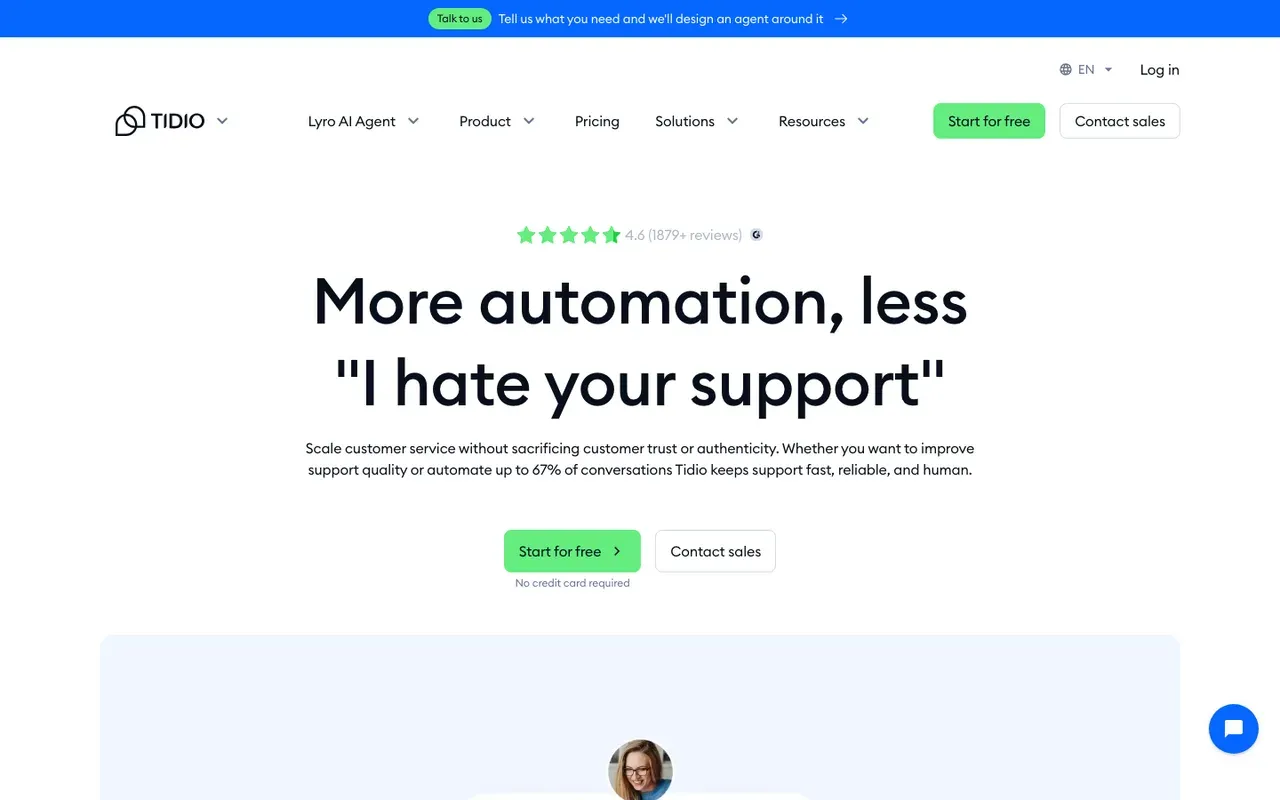
Tidio's plugin is one of the most installed chat plugins on WordPress: Tidio's native WordPress plugin has 70,000+ active installations and includes Lyro AI on the free plan with limited interactions. The Free plan has no monthly fee. Paid plans start at $29/mo, and the Lyro AI agent is sold on top: Lyro AI Agent quota starts at $39 per month for 50 conversations on monthly billing.
Lyro learns from website URLs you paste in. For meetings, Lyro can share a Calendly scheduling link through a Book-a-call Action. That is a link, not a calendar in the conversation.
Side-by-side: Darwin vs Tidio.
Where it stands out
- Native plugin with 70,000+ active installs
- Free plan, plus a 7 day trial of paid features
- Lyro trains on URLs you provide
Limitations
- Booking is a shared link, not in-chat
- Priced by conversation volume, so costs climb with traffic
- Built for support and stores, not B2B pipeline
Verdict. The safe pick for a WooCommerce store. Not a pipeline tool.
Facts checked Sep 11, 2026WordPress.org Tidio
Elfsight AI Chatbot
Sites that want a cheap embeddable assistant trained on their URLs, without a plugin.
Anyone who needs booking or more than a few hundred messages a month on a small budget.
- Install
- Embed code
- Starting price
- $0/mo
- Free plan or trial
- Free plan
- Native booking
- Not documented
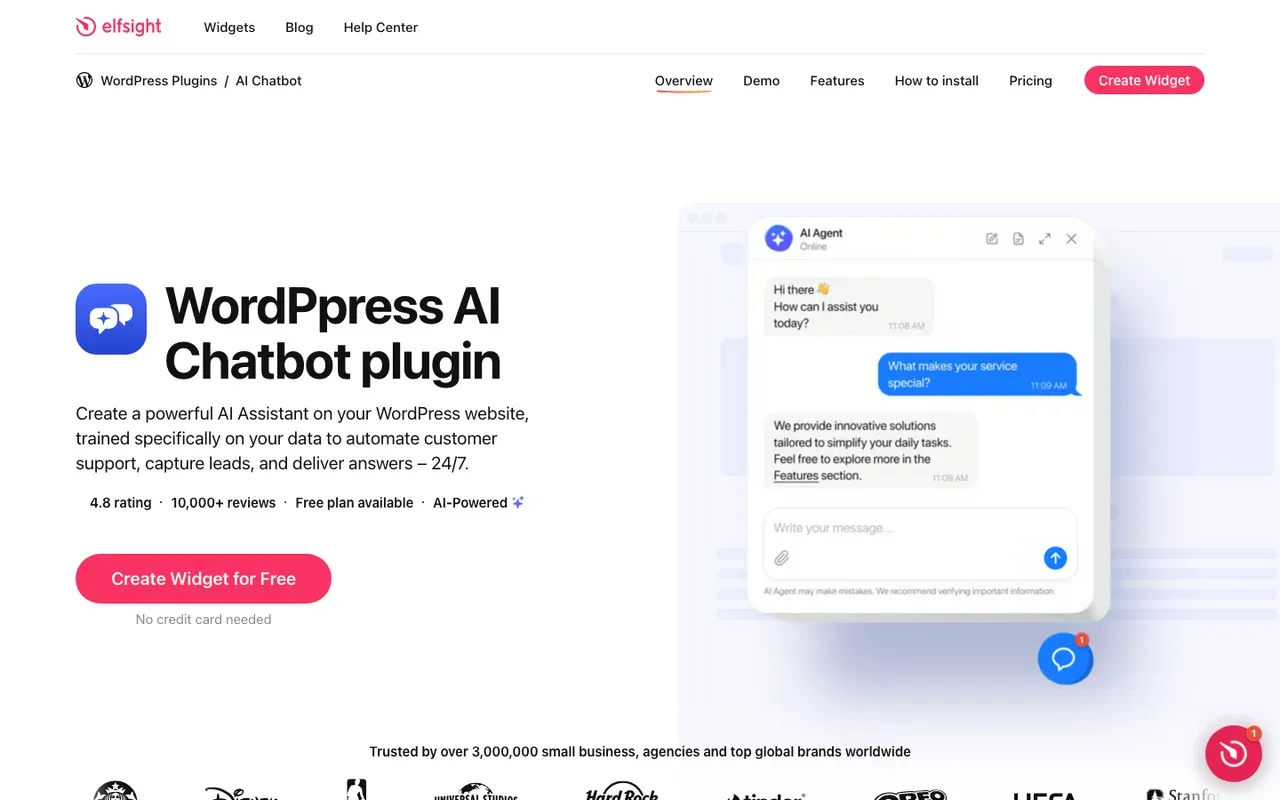
Elfsight sells widgets, and its AI Chatbot is one of them. Embed code that works on WordPress, Shopify, Wix and HTML sites. It trains on your site: Train the assistant with site content via the website's URLs, plus files and Q&A.
The Free plan is $0 forever with 1 chatbot, 50 messages and 200 views a month. Basic is $5 per month with 3 chatbots and 300 messages; Pro $10 with 1,000 messages; Premium $20 with 3,000. Plans scale by messages and views rather than seats.
Details are on Elfsight's pricing page.
Where it stands out
- Embed code, no plugin to maintain
- Trains on your URLs, files and Q&A
- Free plan and very low paid tiers
Limitations
- Tight message caps on the low tiers
- No meeting booking
- A widget product, not a sales tool
Verdict. The cheapest decent embed if you just want questions answered from your pages.
Facts checked Sep 16, 2026Elfsight
Chatbase
Teams that want a general-purpose AI agent builder they can point at documents and deploy to a WordPress site.
Anyone who wants a WordPress-specific plugin or booking in the chat.
- Install
- Plugin or embed
- Starting price
- $0/mo
- Free plan or trial
- Free plan
- Native booking
- Calendly or Cal.com in chat
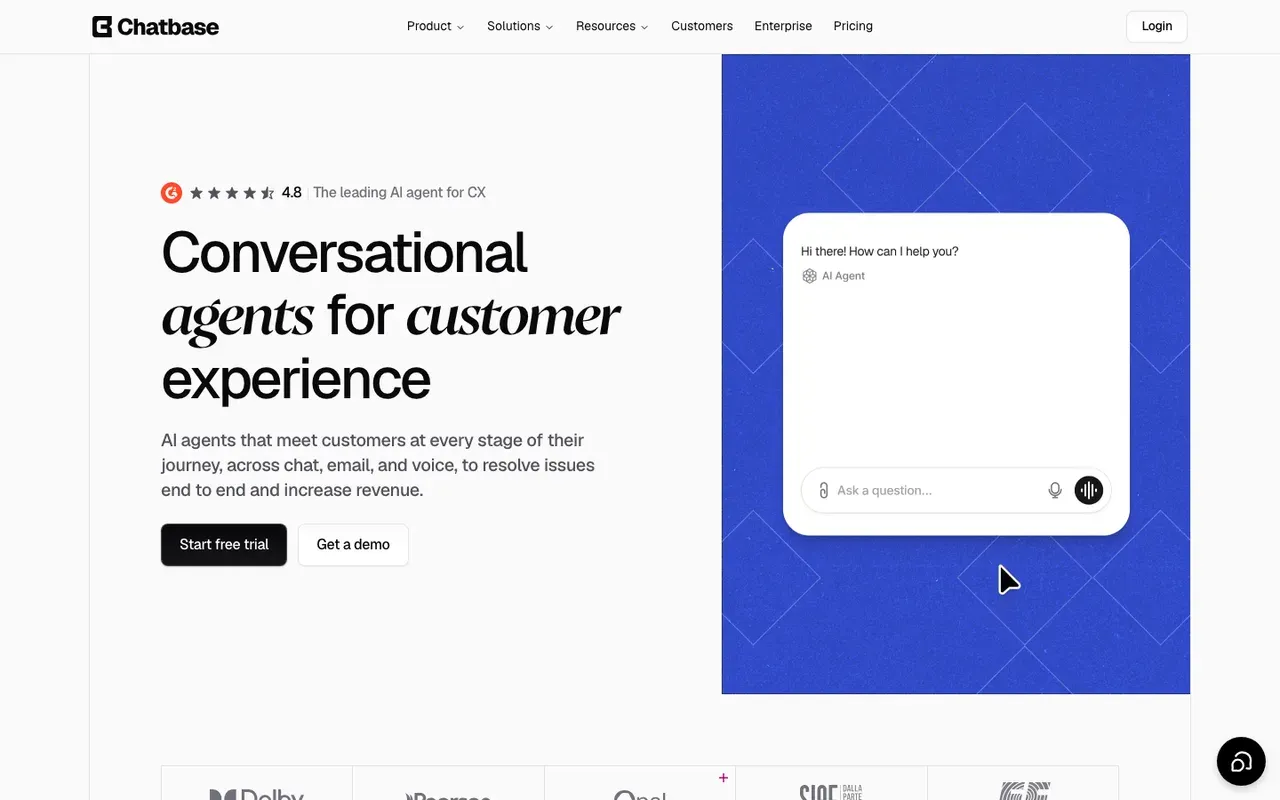
Chatbase starts from the agent rather than the website. You connect your data sources, build an agent, and then decide where it lives: a chat widget, email, voice or WhatsApp. That makes it more flexible than a WordPress plugin and, for a site owner who only wants chat, a bit more than they asked for. The Free plan is $0 with 50 message credits a month and one member. Hobby is $40 per month with 700 message credits; Standard $150 with 4,000; Pro $500 with 15,000.
The pieces a WordPress owner needs are all in the docs. Training: Add files, websites, text, Q&A, Notion pages and support tickets to train the agent; link sources can be individual URLs or a sitemap crawl. Install: A Chatbase WordPress plugin: install and activate it, then paste your Agent ID into Settings, Chatbase options. Booking: Calendly and Cal.com actions let customers check availability and book meetings without leaving the chat.
Details are on Chatbase's pricing page.
Where it stands out
- Multi-channel agents from one build
- Calendly and Cal.com booking inside the chat
- Official WordPress plugin plus an embed script
Limitations
- Message credits run out fast on the free plan
- Free agents are deleted after 14 days of inactivity
- More product than a site that only wants chat needs
Verdict. A capable general agent that happens to have a WordPress plugin. Worth it if you want the same agent on email and voice too.
Facts checked Sep 16, 2026Chatbase
ChatBot.com
Teams that want an official plugin, a website knowledge source and a trial before paying.
Sites that need a free plan long term, or chat that improves on its own.
- Install
- Plugin
- Starting price
- $25/user/mo
- Free plan or trial
- 14 day trial
- Native booking
- Offers a booking
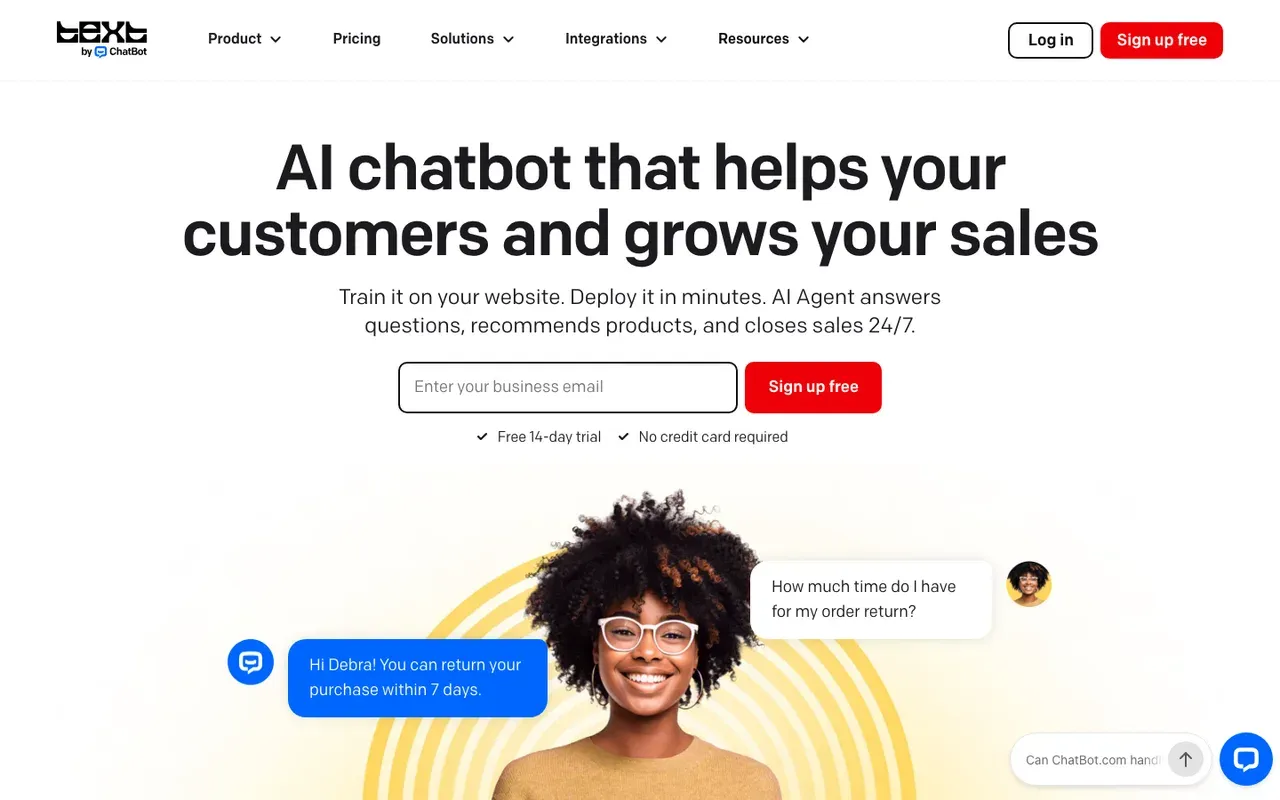
ChatBot.com, made by Text (the LiveChat company), ships an official plugin called AI chatbot by Text, and it gives you three ways in: search for it under Plugins and click Connect, add it from the Website widgets screen, or upload the zip yourself. Your website becomes a knowledge source, so the agent references your pages when it answers, and you can add PDFs and documents alongside. It also does a little selling: it collects a name and email, asks a follow-up question or two, and can offer a consultation booking.
It is a paid product. Essential is $25 per user per month on monthly billing, or $19 per user per month billed annually. You get a 14 day trial to decide, and the plans cap how much the AI can do: Per-user plans with monthly AI resolution caps: 10 on Essential, 200 on Growth.
Details are on ChatBot.com's WordPress page.
Where it stands out
- Official plugin, three install routes
- Website pages and files as knowledge sources
- Consultation booking offered in the chat
Limitations
- No free plan after the trial
- Per-user pricing with monthly AI resolution caps
- Support-oriented; openings are written by hand
Verdict. A solid paid plugin for a team that wants a trial and a real knowledge base.
Facts checked Sep 16, 2026ChatBot.com
Best free chatbot for a WordPress website
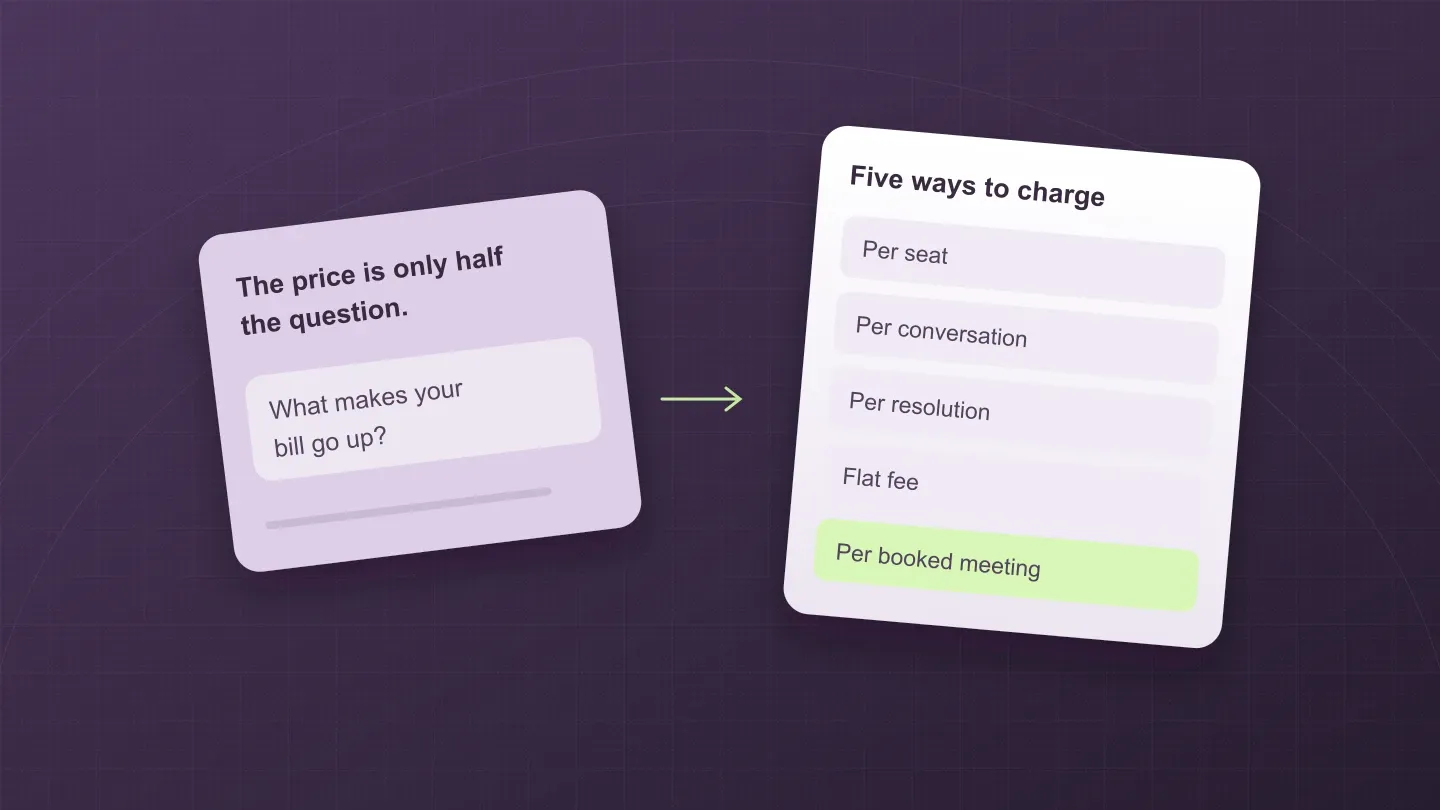
Every tool on this list has a way to start for nothing, but “free” means something different for each one. WPBot and AI Engine are free plugins, and you pay the AI provider for what the bot says. Jotform's Starter plan caps conversations at a hundred a month. Elfsight's free tier allows fifty messages. Chatbase gives fifty message credits and deletes idle agents. Tidio's free plan covers a small volume of chats with limited Lyro. ChatBot.com offers a trial, not a plan.
Darwin's free plan is the odd one out: $0/mo, unlimited chats, and 5 free bookings. You pay $20/booking after that. If the bot never books anything, it never costs anything, which is a useful way to find out whether your site can produce meetings at all.
How to add an AI chatbot to a WordPress website
Two walkthroughs, one per route. Either takes about ten minutes.
The plugin route
- In your dashboard go to Plugins, then Add New, and search for the plugin by name (WPBot, AI Engine, Jotform AI Chatbot, Tidio, or AI chatbot by Text for ChatBot.com).
- Install and activate it, then open its settings page from the left menu.
- Connect the account or API key it asks for. For WPBot and AI Engine that is your own OpenAI or other provider key; for the others it is the vendor account.
- Point it at your content: run the site crawl or embedding step, and add any documents.
- Set the widget's look, position and welcome message, and choose which pages it appears on.
- Clear your cache, open the site in a private window, and ask the bot three real questions from your pricing page.
The embed route
- Create the account on the vendor's site and, for Darwin, paste your website URL so it can read your pages.
- Copy the snippet the vendor gives you.
- Add it once: in Google Tag Manager as a Custom HTML tag on all pages, in a snippet plugin such as WPCode, or in your theme's shared footer.
- Publish the tag or save the theme, clear your cache, and load the site in a private window.
- Ask the bot three real questions and, if it books meetings, book one yourself to check it lands on the right calendar.
If you use Tag Manager, the Darwin Tag Manager guidecovers the exact tag settings; the WordPress pagecovers the theme-footer route.
Making the chatbot generate leads, not just answers
Most WordPress chatbots are installed to deflect questions. The ones that pay for themselves do three more things. They ask one qualifying question when a visitor seems interested. They offer a specific next step, a booked call rather than a form. And they change what they say on the pricing page versus the blog, because those visitors want different things.
Then measure it. Conversations per hundred visits tells you whether the opening line is working. Meetings per page tells you which pages are worth improving. If your tool only reports messages answered, you are measuring support, not sales.
How to choose
Eight tools, two install routes. Here is the same list arranged by the site you actually run.
- Start with Jotform if you want a free plugin that crawls the site and can take reservations without any setup on your side.
- Go with WPBot if you want a plugin that books through Google Calendar and lets you pick the AI model behind it.
- AI Engine is for the developer in the room: your own keys, your own vector database, no monthly chatbot bill.
- If the site is a WooCommerce store, Tidio's plugin has been doing this for years and has the install count to prove it.
- Elfsight is the cheapest embed that will answer from your pages, as long as your message volume stays small.
- Chatbase makes sense when you want one agent across chat, email and voice, with booking through Calendly or Cal.com, and WordPress is just one of the places it appears.
- ChatBot.com suits a team that wants an official plugin, a trial before paying, and a proper knowledge base behind the answers.
- And if your site exists to turn visitors into booked calls, Darwin: no plugin, nothing to pay until it books, and the only one here that keeps improving on its own.
WordPress questions.
What is the best AI chatbot for WordPress?
There is no single winner, because WordPress sites want different things from a chatbot. Running a small business site and want a free plugin that answers from your pages? Try Jotform or WPBot before anything else. Comfortable with API keys and want to own the whole stack? AI Engine. Selling through WooCommerce? Tidio has been the default there for years. And if the point of your site is to get visitors onto a call, Darwin is the closest fit, installed with one script and no plugin at all.
Do I need a plugin to add a chatbot to WordPress?
No. A plugin is one route; a single script added through Google Tag Manager, a snippet plugin or your theme footer is the other. Plugins can read private content and WooCommerce data. Embeds have nothing to update and cannot conflict with your theme or cache. Darwin and Elfsight are embeds; WPBot, AI Engine, Jotform, Tidio and ChatBot.com are plugins; Chatbase offers both.
Is there a free AI chatbot for WordPress?
Yes, and in more than one sense of free. WPBot and AI Engine are free plugins, but you pay your AI provider for what the bot says. Jotform, Elfsight, Chatbase and Tidio have free plans with caps on conversations or messages, so read the limit before you commit. Darwin is free with 5 free bookings and unlimited chats, and only charges once it books something.
Will a chatbot slow down my WordPress site?
A plugin that loads scripts on every page can, and it will show up in PageSpeed. An embed loads from the vendor's servers and is usually lighter. Either way, test with your caching plugin switched on, and load the widget only on the pages where you want it.
How do I add a chatbot to a WordPress website?
Plugin route: Plugins, Add New, search the name, install, activate, connect the account or key, point it at your content, set the widget, clear the cache. Embed route: copy the vendor's snippet, add it once through Google Tag Manager, a snippet plugin or your theme footer, publish, clear the cache. Both take about ten minutes.
Does it work with WooCommerce and Elementor?
Plugins such as WPBot and Tidio advertise WooCommerce hooks; embeds see only what a visitor sees, so they cannot look up orders. Page builders such as Elementor are fine with both routes because the widget sits outside your layout. The thing to test is your caching layer, which is the usual cause of a widget that vanishes.
Sources & references (21)
Supporting material for the product details in this article. Each source keeps its own access date.
- Darwin WordPress integration Darwin · Accessed
- Set up with Darwin Darwin · Accessed
- Connect your scheduling page Darwin · Accessed
- How Darwin improves your openings Darwin · Accessed
- Darwin plans and booking prices Darwin · Accessed
- WPBot – AI ChatBot for WordPress WordPress.org · Accessed
- AI Engine by Meow Apps Meow Apps · Accessed
- Jotform AI Chatbot for WordPress Jotform · Accessed
- Jotform Pricing Jotform · Accessed
- Tidio – Live Chat & AI Chatbots (WordPress plugin) WordPress.org · Accessed
- Lyro – a quick setup Tidio · Accessed
- Lyro Action templates Tidio · Accessed
- Edit your initial message (first flow) Tidio · Accessed
- Tidio pricing Tidio · Accessed
- Elfsight AI Chatbot Pricing Elfsight · Accessed
- Chatbase WordPress integration Chatbase · Accessed
- Chatbase data sources Chatbase · Accessed
- Chatbase actions documentation Chatbase · Accessed
- Chatbase Pricing Chatbase · Accessed
- ChatBot.com WordPress integration ChatBot.com · Accessed
- ChatBot.com Pricing ChatBot.com · Accessed